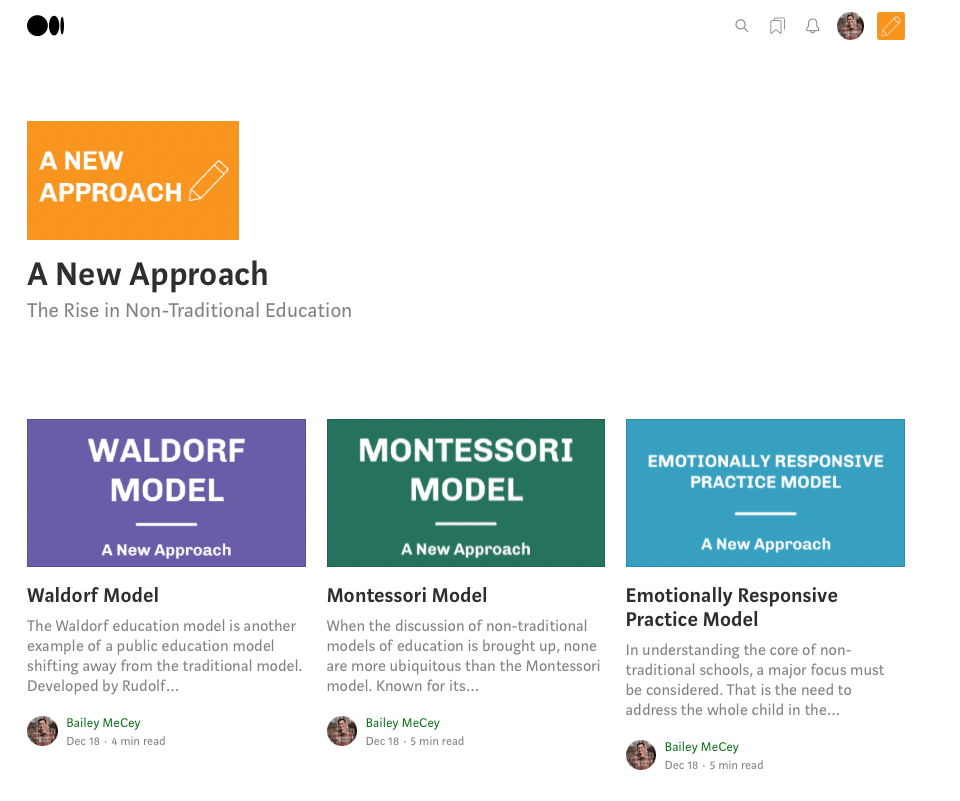
As the course comes to a close, the focus is on finishing up post-production and publication. The goal was to finish editing the blogs, post them onto the publication page, and create the social media campaign.
With my blog drafts ready to go, the goal was to first edit them. The edits help refine the blogs and catch errors. Along with the edits, I also took a moment to read the articles out loud. When something is difficult to speak, it can be even more difficult to read.
As well, looking back on my blogs they were lacking a conclusion. I decided to add a final section to each of them to help wrap up the models. As well, I felt that the Emotionally Responsive Practice model was lacking solid research to help support the argument of why that model is worth highlighting. I went back to my research and added to research journals that gave more depth to the blog.
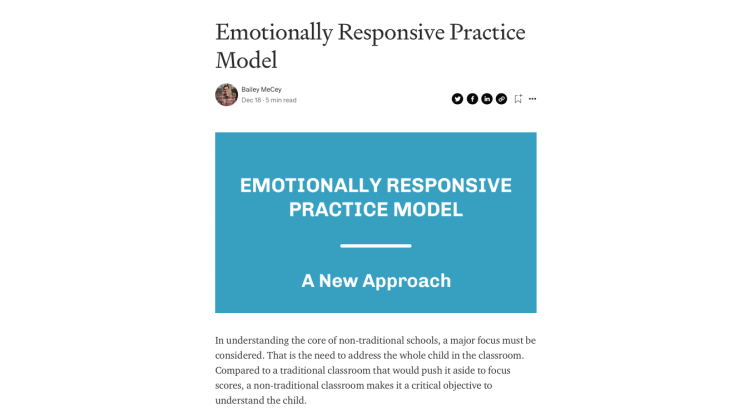
After editing the blogs, the next step was to edit and upload the photos for the blogs. Unfortunately, I was unable to get my photos for two of the models. However, I was sent photos that still work in telling the story of the model and give an insight that would otherwise be tough without them. While the photos are in different aspect ratios, I edited them to include the frame to help make them feel more cohesive. As well, I incorporated the section model color to the frame so that felt like part of one whole.
With the visuals set, I selected three for each model. While more could have fleshed out the visuals, the ones I have still help propel the blogs than they would have without them.
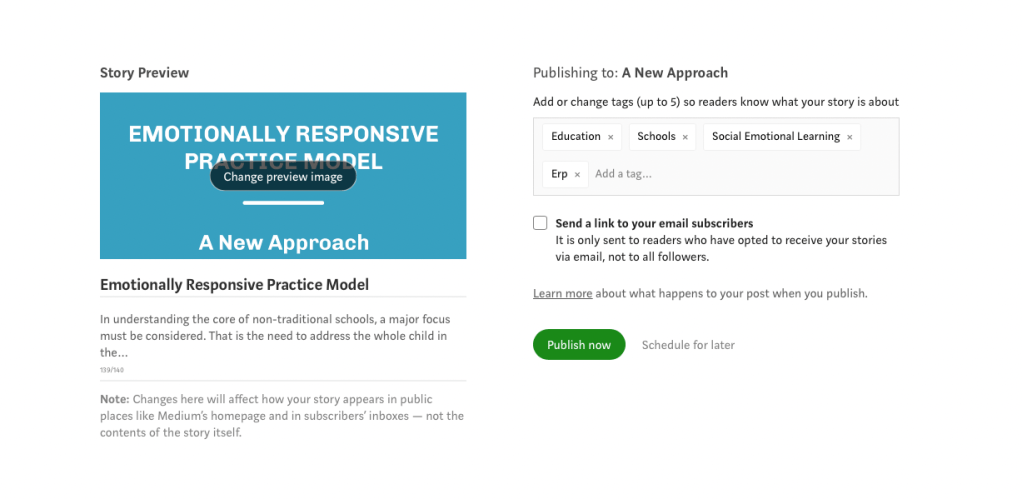
Once the visuals were ready to go, I went back to my publication page on Medium to create the blogs. After creating the blogs and inserting the text, I spaced out each of the paragraphs to best add in the visuals. One aspect of Medium I enjoy is how it connects with other blogs to help share content. The tagging system, akin to adding hashtags to a Twitter post, helps connect users to writing content they might enjoy. For each of the blogs, they include tags that connect them to the broader education writing and specific education spheres for that model.
Now that the publication is ready and the blogs are posted, the last part of the publication is to create a social media campaign. I had previously created an Instagram page that is connected to the Medium account to help share the content on a different channel.
I already had the visuals from the blog, so it was simple to repurpose them for the social media campaign. The visuals were also edited purposely to look best on Instagram, so they could pop on people’s feeds. For the text, I decided to use the quotes from my interviews for the posts. Instead of feeling boilerplate with having the blog text go into each post, the quotes can draw users into the content. Then, if they are interested, they can click on the link to read more.
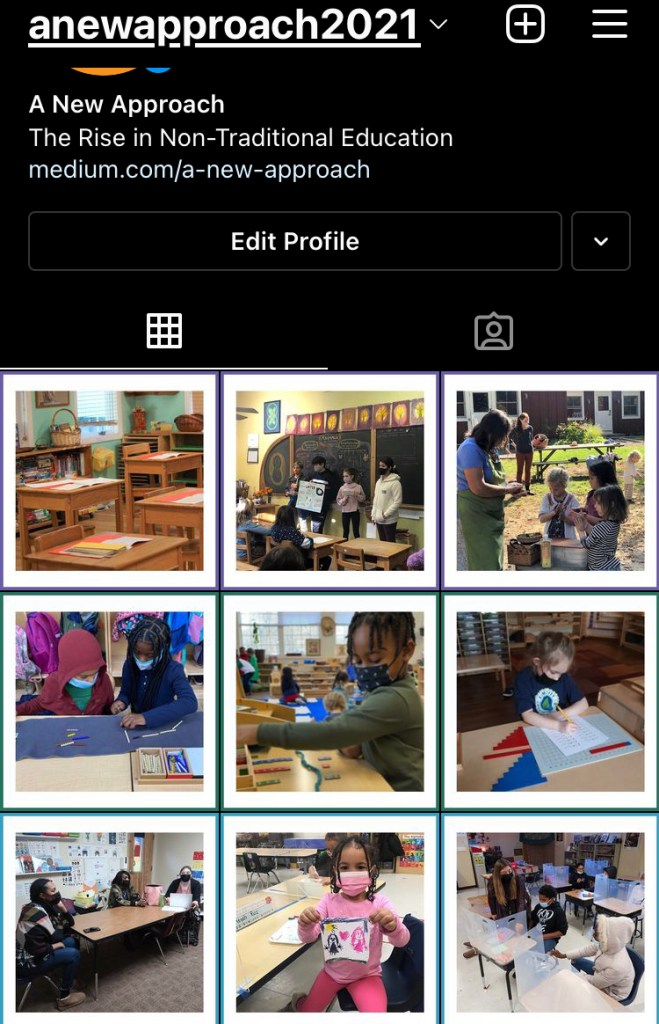
To help share the content more, I selected three hashtags for each post. Hashtags are important, as research has shown that posts with at least one hashtag have 12.6% higher engagement compared to posts that do not have any hashtags. While hashtags help to share the content with new audiences, I did not want a mountain of them so they clutter the posts. While I decided to publish a selection of three posts for each model, I hope to in the future post more to get the content out there.
Looking back on the project, I’m proud of how it turned out. There was a lot of adapting and I was sure at some points it was not going to work out, but overall it came together really well. I hope to do more work like this in the future. The main goal for me was to take time to learn about these models that I had not before, which I feel I have accomplished.
 Bailey MeCey
Leave a comment