Visual storytelling has a major impact on how we understand the emotions of an image. In Visual Storytelling, Losowsky describes visual storytelling as a “combination of emotional reaction and narrative information” (Losowsky 1). Many aspects of an image can contribute to visual storytelling, from the colors to how the subject is framed.
Given how major of an impact COVID has had, I wanted to examine the different ways visual storytelling has expressed the emotions of the last year. These are a selection of different photos from the CNN article In pictures: The coronavirus pandemic. The photos below are the ones that best tell their story visually, versus being random snapshots.
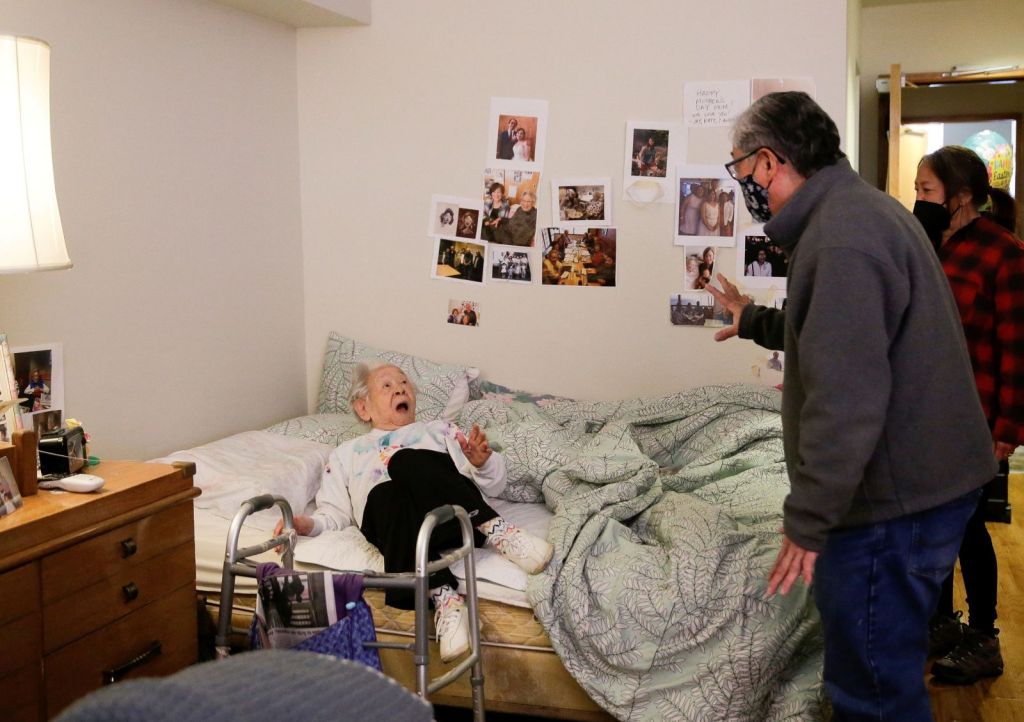
The storytelling here focuses on the emotion of a mother in a nursing home seeing her son for the first time in over a year. Before this the mother could be more melancholic of not being able to see her family, and after is the elation of reconnecting with her son and niece.
The visual storytelling here is focused on the moment of a mother seeing her son for the first time in over a year. In Multimedia Storytelling for Digital Communicators in a Multiplatform World, Gitner describes how moments are important in that they “are crucial to arousing emotion” in the audience that views the image (Gitner 7). The moments can help the audience connect with the story, and one must take time to capture them. The photographer had to be patient to get the exact right photo to catch the excitement in the mother’s face. A moment before or after could also tell the story, but not as effective.
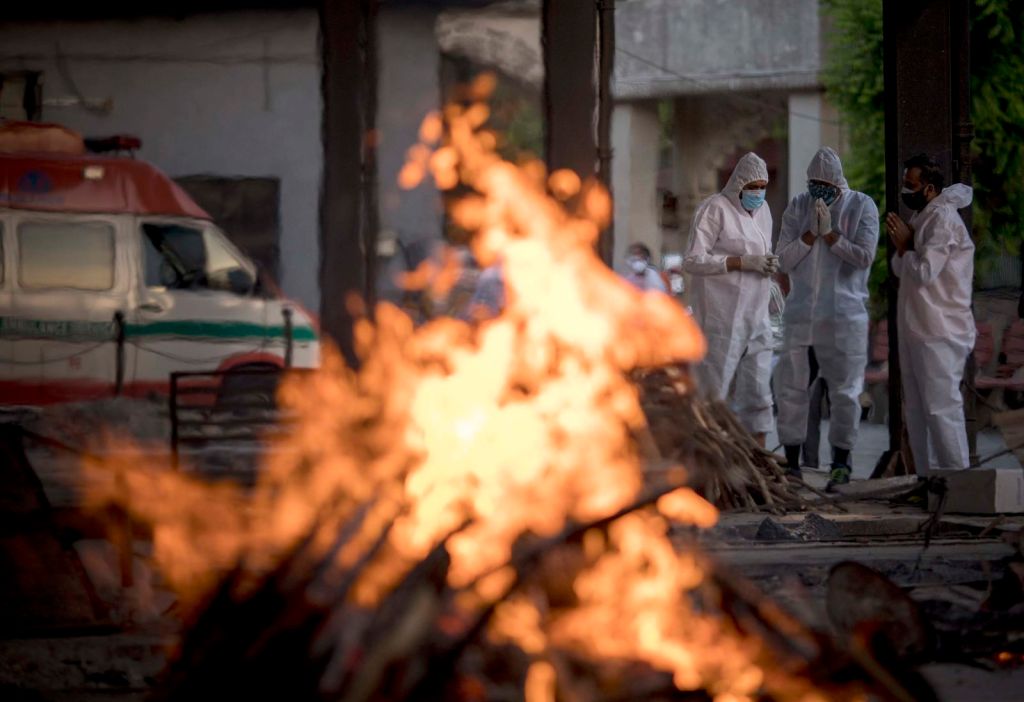
In this photo, relatives are performing last rites at a crematorium in New Delhi. Before this scene, we can imagine the relatives bringing the patient who has died to the crematorium. After, the relatives depart and figure out how to move on without them.
There’s also a balance between the foreground and the background, with the pyre in the center and the emergency vehicle and figures towards the sides. The photographer is using distance so we focus more on the body language of the figures, with the fire emphasizing the impact COVID has had on their lives.
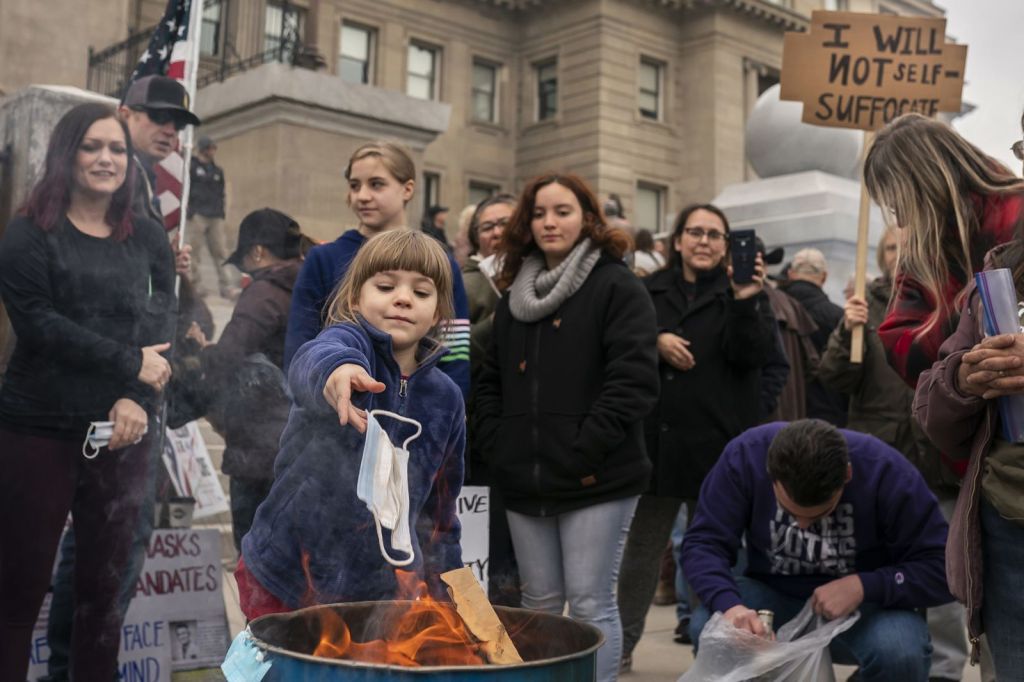
This controversial photo is of a mask burning that took place at the Idaho Statehouse. Before the scene, these are people who have become dissatisfied with the COVID restrictions, and after the scene will continue their protest.
The storytelling is aided by the facial reactions of the people in the background, happy to see their dangerous mentality passing onto the next generation. In The Four Principles of Visual Storytelling, Lien highlights how visual storytelling should “make your audience feel something and feel it intensely” (Lien). This photo can make different people feel different emotions, depending on how they view the image.
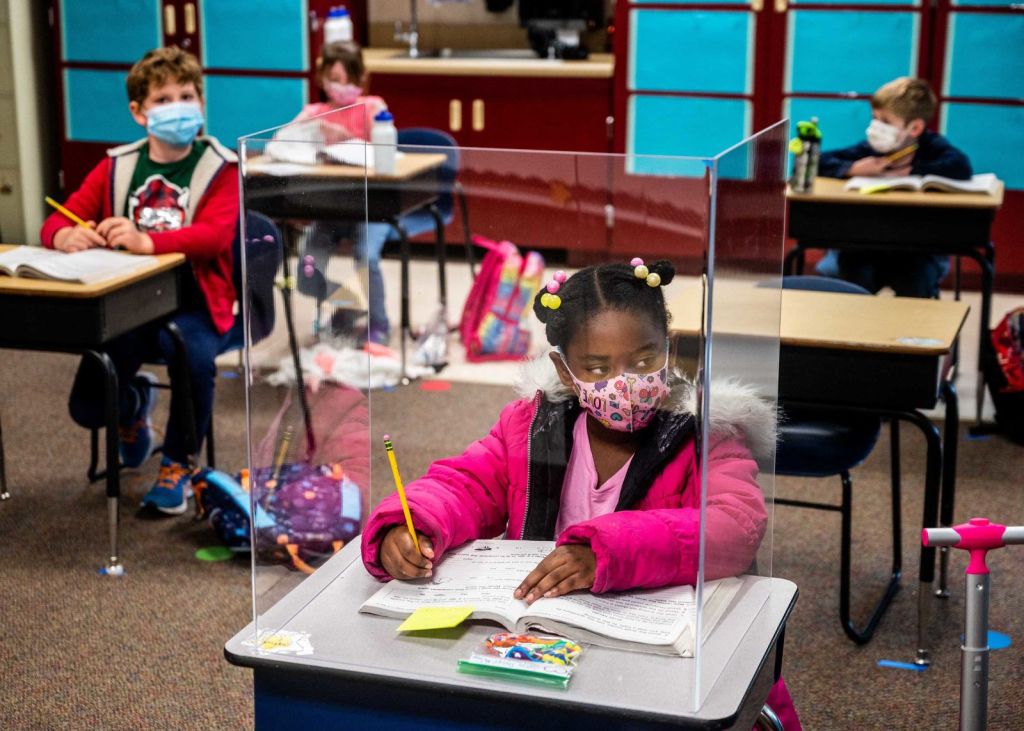
This image is of 1st graders back in school in California. Wearing masks and surrounded by plastic dividers, the before of this scene is these kids doing school on their computers. After this scene, it represents will most likely be the way school functions for the near future.
A lot of the visual storytelling is done through the eyes of the child in the foreground. Lien also highlights how reality is best to highlight, and at this moment this is the reality for these kids.

This image shows a woman who is grieving after losing a family member to COVID. Before this image is the family member dying due to COVID, and after is the burial and moving on from the sudden loss.
Unlike the second image, the photographer has taken the photo closer to the figures. Thus, we are more focused on the raw emotion of the grieving family member. Our eyes are also drawn to the figures, and how they are looking into the occupied hearse.
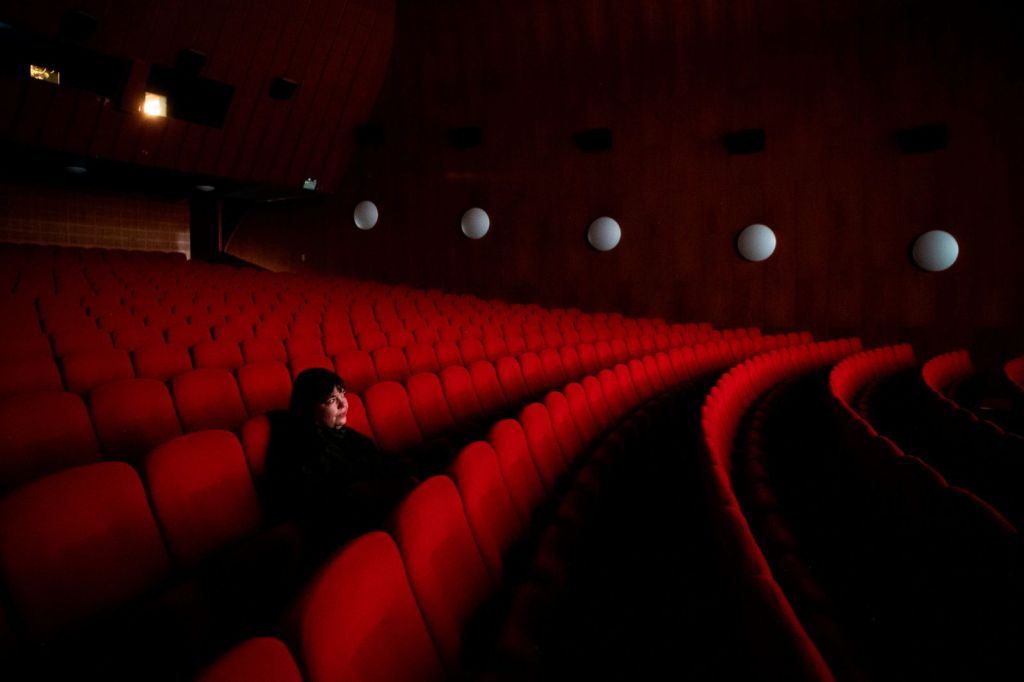
The storytelling of this image focuses on another subject of COVID, how we were unable to attend common social gatherings. One of the many types of social activities that changed was going to the movies, with many opting to stay home or go to the drive-in. This image of a woman sitting alone in a movie theater emphasizes the isolation aspect that came from quarantine that will continue to linger. Before this scene, this woman was trying to return to a favorite activity, and after is some hope that not everything was lost from COVID.
Color and light are used very effectively in this image. The bright red of the movie theater seats draws the eye in, and the illumination of the woman’s face draws the audience in closer. The color also brings a warmth that adds a lot of emotion to the image.

In this photo, a man places a cross on Copacabana Beach for an event marking Brazil’s death toll. Before we can imagine that this man has lost someone close due to COVID, and after what this will mean for the different communities in Rio de Janeiro.
The photographer has also used silhouettes to signify the beauty of the surroundings to the ugliness of those that have died due to COVID. The silhouettes add a lot of drama to the scene and reinforce the emotions at play.
Even though COVID has changed a lot of our lives, visual storytelling is still an effective way to present the emotions of how we all are feeling. These images all tell a story and are emphasized by the emotions at work.
Works Cited:
Cable News Network. (2021, May 17). In pictures: The coronavirus pandemic. CNN. https://www.cnn.com/2020/03/19/world/gallery/novel-coronavirus-outbreak/index.html.
Gitner, S. (2016). In What Ways Do We Think about Visual Storytelling Every Day. In Multimedia storytelling for digital communicators in a multiplatform world (pp. 1–33). essay, Routledge.
Lien, J. (2020, December 8). Worth 1,000 Words: The 4 Principles of Visual Storytelling. amplifi. https://amplifinp.com/blog/4-principles-visual-storytelling/.
Losowsky, A. (2012). Introduction. In Visual Storytelling: inspiring a new visual language. essay, Gestalten-Verl.
 Bailey MeCey
Leave a comment