Summary
For this module, the goal was to understand the importance of continuity in video production. Without focusing on continuity, the audience can become lost as there has been no effort to respect the boundaries. The readings and research help to inform on continuity, screen direction and basic sequencing. From there, I created a how-to style video to present how to shoot continuity from a mix of angles.
Reading and Writing
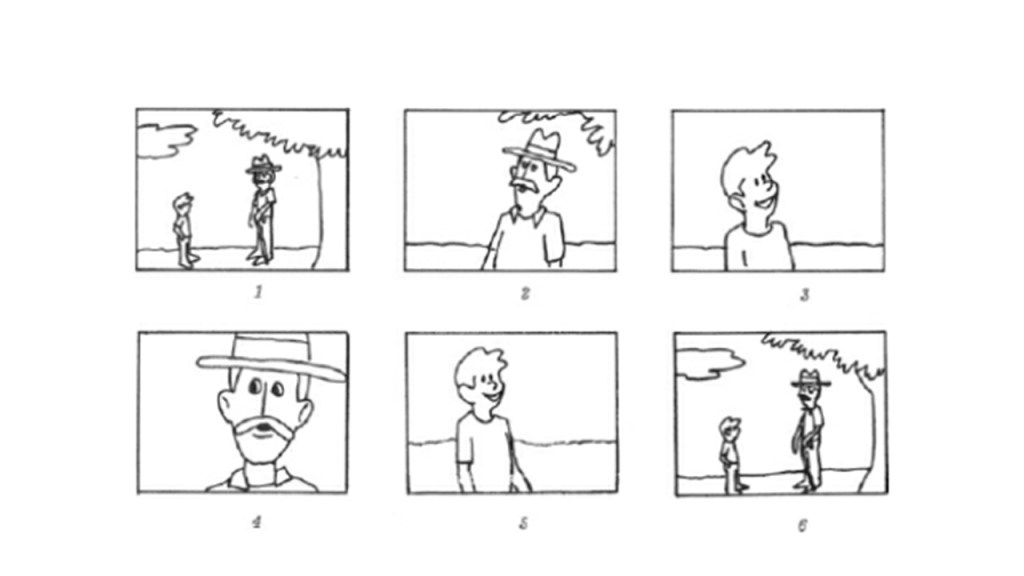
I read chapters three and four in The Bare Bones Camera Course for Film and Video. These chapters focused on basic sequencing and screen direction in a video shoot. In covering basic sequencing, an understanding of shot types is important. The different types of shot types include:
- Wide Shot: Also known as the establishing shot, this shot helps show your subjects and the surroundings in the frame.
- Medium Shot: A shot that highlights a specific subject in the frame from a certain perspective.
- Close-Up: A tighter shot of the subject, most likely their head. An extra close-up can be used to highlight a specific detail in the scene.
- Cutaway: A shot of something else happening in the scene. It can be another subject or a detail in the surrounding.
What is important is varying the types of shots used, so to keep the scene fresh and dynamic. Unless done for a certain reason, an extended wide shot can bore audiences. However, varying the scene with a mix of medium and cutaways can keep audiences from becoming disinterested.
While editing a scene, it’s also important to shoot a mixture of angles and sizes to have more room for flow in the edit. If the angles are not changed, then you can have a cut feel harsh instead of smooth. Cutting on action can also keep a scene flowing smoothly and keep the audience from being fixated on the cut. What’s important is to think about how you are shooting a scene, and how the shots will flow in the edit.
Screen direction is “the direction people and things face when viewed through the camera” (Schroeppel 69). A problem a cameraperson can face is when they “cross the line” while filming, or change the screen direction in a way that abrupt the audience. Once the line has been crossed, it can cause a lot of problems in the edit. One method Schroeppel highlights for addressing this issue is to include a neutral shot between two cuts, to lessen the impact of the line cross.
By making an effort on-screen direction and basic sequencing, it will help keep your video flowing smoothly and keep the audience focused on what they should see.
Research
Indiana Jones and the Raiders of the Lost Ark
In this scene, from Indiana Jones and the Raiders of the Lost Ark, Jones meets with federal agents who have information on the Nazis’ interest in ancient artifacts. This scene represents the classic method of continuity and sequencing. In the beginning, there is a wide shot to establish to the audience the characters in the scene and their surroundings. There is then a mixture of medium shots of specific characters speaking. The scene also contains cutaways, like a cutaway to the book the characters are reading. The sequence is broken up with a variety of shots to keep the scene flowing, even if it is a group of characters talking with not a lot of action on screen. When a character puts a folder on the table, the continuity is respected with that folder remaining for the rest of the scene.
The Guest
The scene from The Guest begins with a wide shot, establishing that the characters are in a desolate surrounding. This is important given how the scene will progress. From there we have a mixture of wide shots of the characters speaking, with a mix of medium and close-ups. Continuity is respected with each of the characters not shifting from where they are in a cut, along with the other objects remaining where they were. Even though there is more movement in the camerawork, the editing keeps the scene flowing in the right direction.
Sequence Erase
In the beginning shot from the video Sequence Erase, two characters meet up with another group to discuss plans for a mission. As we enter the building, there is a wide shot of a group of characters that moves into a close-up of a character speaking. From there the scene cuts between medium shots of different characters to wide shots to show where the characters are in relation to one another.
When I rewatched this scene, I noticed some errors in terms of continuity that I had never seen before. As Lee takes off his disguise, we see him drop the face beanie on the table and then throw his shirt in front of another character. However, when it cuts back to the wide shot the clothes are gone. There was also a water bottle on the table, and that has disappeared too. Even though those are minor and do not take away from the scene, it still was fun to see it from a different perspective than before.
Create
To go along with this module, I created a how-to style video. My video covered how to start your herb garden, from adding the seeds to the soil starter to transferring it to a pot. I wanted to keep the video light and simple while adding a variety of angles and cutaway shots. At the editing phase, I mixed the different shot angles to create continuity, along with adding in cutaways to avoid jump cuts. Instead of narration, text-on-screen was used to highlight points of importance.
Works Cited
Schroeppel, T. (2018). The Bare Bones Camera Course for Film and Video. Langara College.
 Bailey MeCey
Leave a comment